Things You Never Hear Women Say…..

1) I am sorry

2) I was wrong

3)My Husband, Boyfriend, is a really good man

4) He is a great Father

5) How can I be there for you

6) Let me treat you

7) Let’s do something you like

8) She is a very pretty woman

9) I need to be better at accepting your friends, even if I may not like them

10) When I was out shopping I got something for you…..

Standard

I Am AFRAID

Millennial as much as I fear them, have harnessed their powers of Instagram, Snapchat, Facebook and twitter to show the world film bites of the policer and the police to create an image that is quite disruptive in the American culture, as much as we see these grass roots movements, I also question, why is it with all the black on black violence, does a movement not start to not tolerate all the black young kids that die at the hands of another young black male? Is that not what black lives matter is also about???

Just as alcoholics have catharsis from publicly admitting their addictions, I propose that some of the United States nonblack population have their emotional catharsis day.
Someone once said that we all carry within us inner demons, demons we call fear, jealousy, anger and hatred, if we do not conquer these fears life is a tragedy, if we can conquer these fears, a single day of living is a triumph.

I propose that we assign our nations “fear day”. This is a day that will define us as declaring our fears… Simply, a small segment of our population would declare their inner fears toward the black race. Something such as this,

“My name is John smith and I am afraid of black men”!!! And say it like an affirmation!!!!
I am afraid of black men because they are inherently violent…
I am afraid when I am in a room alone with them, I feel like prey and they are the predator
I fear they will kick my ass, as they say I will get an ass whoppin!. They will take my 5 dollar ass and make some change

I fear their physical prowess,
I fear their voices, they are so deep and baritone they scare me.
I fear black men and corn rows

I fear black men whom wear white tank tops that means they beat that wife’s and are in a gang, especially if they have a rag around their heads.
I fear their thoughts, they should not be in a leadership role as they are not intelligent, they have inferior IQ and do not have any intelligence, innovation, work ethics nor ability to think from higher brain centers
I fear their music so filled with hatred and anger
I fear their strength they are bigger, faster and stronger than me, so when I approach them I should just kill them before they kill me

I fear black men in the work environment because they become violent for just talking to them

I fear black men because their penises are larger than mine and therefore they perform better than me sexually

I fear that black men will take away our white women, (see Kim Kardashian)
I fear black men because they can always intimidate me when they walk into a room with their pants pulled down to their knees that means they are well hung, like Mandingo or something…..

I hate going to company functions, I fear their dancing when I am in a room with them, they will ridicule my dancing and I will be humiliated as the “dorky white guy”

Black men steal my soul, and my manhood, I fear you, in the work environment and in the community, so I kill you…………Until you kill YOURSELVES,…….

Standard

“Health Care Provider” The Words I Love to Hate!!!!!

These three words have managed to make it into our lexicon and I really dislike the phrase, conceptually I fully support these three words.  Since the turn of the century, all levels of any one in health care calls themselves Health care providers and want to be actively involved in recognition and treatment decisions of the patient experience…


So what defines the patient experience and when does it begin and when does it end? When a patient suddenly goes south and life leaves them do they still feel as part of the team? Do they participate and support bringing them back to life? What about the horror of death and the liability of medical treatment? one moment of misjudgment and your decision can mean the life or death of the person in front of you…

In my experience, I have been at the bedside when that patients lips turn blue, the line on the monitor is flat and all health care providers are now scrambling out of the room, it is usually myself, a nurse and usually a resident or medical student trying to bring this patient whom one foot is on the banana peel and the other foot is on the autopsy table…

Where are all the damn health care providers?? My guess is that when all is going well everyone wants a piece of the pie, when things go south, no one wants the responsibility nor the accountability or liability. I have had the opportunity to serve on many committees to review deaths in a hospital, I always wonder why we all are so afraid to speak up? Where are all the health care providers? I am usually the elephant in the room saying, “we screwed up”… much like a murder, the previous twenty four hours prior to death, many signs and signals that were not apparent become very clear.

I argue that health care providers should also be involved and dissected in their part of the complication of a patient, much like an administrative autopsy. You can’t rejoice in the positive and disappear when things go wrong, this concept brings me back to team work, when you work and play as a team, you share the joy of a championship, you also share the trials of losing…


Standard

Competency versus Politeness? What Truly Makes a Better Doctor??

    I recently had outpatient surgery.  Obviously as a physician my perspective on the experience is far different than the non-physician. I had my gallbladder removed laproscopically.  Three small holes were introduced into my abdomen, carbon dioxide was used to lift the abdominal wall off the organs and the intact gallbladder was pulled through my belly button.  Modern medicine is truly amazing.  This experience lead me to ask what do patients really look for in their doctor?


   The hospital accrediation process as well as the governments center for medical services have been trying to determine what exactly determines quality outcomes in patients?

 There are three working models:


1) A doctor whom greets patients, checks off on a list of duties would be considered quality care.


2) Patient assesment of physicians by surveys, i.e was your doctor nice? Did they listen? did they show up on time?   this is also a common metric, such that is you are polite, then you get good surveys and therefore good quality.


3) Quality is determined by outcomes? The lowest infection rate, bleeding, death, etc.  Whom inputs the data may greatly bias the results. Also under this model, I would always perform operations on atheletes without diabetes nor obesity, I would have superior outcomes!!!! Just deny all the patients whom have multiple health problems and leave them to find someone to take their case and absorb the risk…


 I am not a believer in either of these models as they have yet to be defined and have too many loopholes and bias.   So when I look at how I processed my surgeon, it was simple, I found the busiest gallbladder surgeon and asked him his deaths and outcomes rate.  He does not have the best bedside manners but who cares really?  I want him focusing on my gallbladder not thinking about  how he can make me feel warm and cozy.  I do not need the Knute Rockne speech to do one for the gipper, I want him laser focused and not really looking to blow sunshine up my asshole.


Contrary to popular belief, it is very possible to have a very nice doctor with minimal competency. I am a little more mercenary in my approach to life, I want the best, even if it means my doctor has the personality of a dead fish. Why perhaps? as you age, you recognize the finality of your morality. I only get one shot to get it right, so why not stack the deck in my favor???

What about you???????


Standard

Doctor Beyond Mental Disorders????

Physicians are the most educated and most regulated of all professions. I submit this essay written by a physician regarding life and death, no not the patient this time, but how one deals with the issue, what I like to call, “whats the human cost”??????

World Changing
Ellen J. Plumb, MD
Ann Intern Med. 2015;162(8):594-595. doi:10.7326/M14-2076
Text Size: A A A

Like many physicians, I can tell you the exact moment when I decided to become a healer. It involved an experience with a man in Uganda dying of AIDS in a house made of mud crumbling back into the earth. It involved a 21-year-old me as an undergraduate anthropology researcher, helpless in my confrontation of the agony of death. It was a powerful, pivotal moment that changed my life, a tangible whisper that ignited a deep sense of powerlessness that ultimately pushed me away from public health and onto the path of medicine.
Becoming a physician was not easy. I struggled to learn the details of the physical world and pass the MCAT examination, learning and relearning the same things over and over again. After almost failing my first medical school course in anatomy, I invested myself entirely in learning the language and culture of medicine. I excelled in my clinical years and graduated medical school in 2010 as an empowered and passionate person.
The details of my intern year come to me in memories built from a complex matrix of sensory experiences, all linked to difficult-to-define emotions. I remember the nights on labor and delivery—the shocking sight of life emerging, the intensity of the immediate moment of disconnection and transformation of one parasitic being into another. I remember the moments of death and the way they defined the essential and ultimate vulnerability of a person. I remember the constant vibration of a pager and struggling to communicate medical orders across the uncomfortable space of frustration and physician authority. I remember feeling like a fraud every day. I remember the loneliness.
Midway through my second year of a 3-year residency, I sat down for a meeting with my mentor to discuss my future that was scheduled as part of my efforts to test boundaries and explore possibilities for professional growth. I had emerged from intern year relatively and proudly intact—proactive, energized, and curious. My mentor did not greet me or look at me but instead immediately asked me about a particular patient. As he repeated his name, I searched my memories for his face, confused about the introduction of this patient’s name into the narrative of my future.
Like all of my memories from intern year, this patient assaulted me through a series of vague flashbacks. He was alone in the hospital room. He had a sweet smile. The room smelled like urine. The cardiac monitor was flashing. It was a long, lonely 24-hour call in the hospital. I was tired. I wrote progress notes about his care one morning. I implemented a team plan. I ordered a couple of labs. I signed the discharge paperwork. He had no visitors, and he took the bus home alone.
“Well,” my mentor said nervously, looking through this patient’s record, “he died 12 hours after you discharged him from the hospital. You are being sued.” We spent a few minutes discussing my future as a doctor, but I was deafened by disbelief. In an instant, the future was terrifying. As I left his office, my mentor called after me, “You are the type of person who is going to change the world.” Instead, this was the moment when the world of medicine changed me.
Like all physicians who are sued for malpractice, I started receiving letters from lawyers. I was not permitted to discuss the case with my colleagues. My involvement was the result of care that I provided during my first inpatient intern service month as part of a hierarchical team of competent and compassionate physicians. I started my first block as an admitting senior resident after receiving my first letter in the mail, the details of the case against me including allegations of neglect. Every decision that I had to make in those first few weeks was threatening, fraught with feelings of failure, fear, and anxiety. I was forced into a silence of shame, alone and vulnerable. With each letter that I received from the lawyer, my heart ached, the accusation of neglect repeatedly reconstituting as a tangible knot of resentment, anger, insecurity, and profound sadness. I spent thousands of hours during my last 2 years of residency reconciling the privilege and responsibility associated with caring for patients with the overwhelming fear of making a mistake.
I was deposed during the last month of my residency. This is when I had my first clinically defined panic attack—3 years of anxiety cascading out of me in frantic tears and quick, shallow breaths. The fear was overwhelming as I faced the moment of exposure, the moment when the world recognized my failure as a doctor. I didn’t just feel like a fraud, I actually was a fraud. I felt stupid. I felt indignant.
I graduated residency several weeks later feeling profoundly disempowered.
During residency, I gained an appreciation for the practice of medicine and the patience required to teach it. But I graduated into darkness from the most personally lonely period in my life with feelings of inadequacy, a fear of failure, and the crushing weight of disappointment—in myself and in the world around me. I was overwhelmed by the responsibility. I again psychologically returned to that mud house in Uganda—I attempted to find myself there, to reconnect with that sentinel moment of awakening, and found myself unable to do so.
Six months into my postgraduate research fellowship, the malpractice case settled 2 days before going to trial. I was conditionally dismissed, my relative freedom from the professional weight of settlement dependent on silence. I was told that I should be grateful for this outcome in which I was legally used and rendered mute. I was shattered and left to pick up the professional and personal parts of myself that were destroyed.
I have spent a long time trying to process the meaning of this experience, trying to quantify how it affected my ability to learn medicine, trying to deconstruct and reconstruct an identity as a healer around a persistently eroding sense of self. When I read back through my sporadic journal entries about this experience, I am struck by the words that I used to describe what I was feeling: decay, smothered, overwhelmed, angry, insecure, exposed, eviscerated, cowardly. The vulnerability inherent in these words is violent and traumatic. This was not a person who was going to change the world.
During my medical training, I spent almost a decade rewiring my brain to think and react quickly and concisely, pouring my creativity and passion into the spaces between the stress of medicine. I started this journey from a place of deep insecurity and disempowerment, and I am still where I started, walking in place. I have judged myself harder than anyone else ever could, and I have found myself to be guilty. I am guilty of neglecting myself and surrendering different parts of myself for different patients. I have given all of myself to become a healer, and I have not learned how to heal myself.
What I have shared is a very personal narrative of the dark emotions, the depression, and the burnout associated with this process and how it has affected my perspective of what it means to be a physician. Experiencing the emotional violence of a malpractice suit during the formative years of my professional development as a physician has been my new awakening. As I struggle to move forward through this new awakening, I am grateful to be part of a profession that recognizes and illuminates the extraordinary diversity of the human condition. On a daily basis, I am both inspired and humbled by the sacrifices made by my fellow colleagues. But, at the end of every day, I experience a deep sense of mourning and an overwhelming compulsion to walk away from this profession and from the person, the doctor, whom I have become. I am not sure where to go from here or how to use this extraordinary experiential education in my future, but I know that I need to feel empowered again. I need to feel like I am walking forward and that I might, just might, be able to change the world.

Standard

Nature versus Nurture ?

We all see and experience life through a filter, one we call self.  This filter is a summary of our experiences and of the people with whom we surround ourselves.

You see we are on this incredible journey called life. There are many peaks and troughs, it is only by recognizing and appreciating the peaks as well as the troughs of the ebb and flow of life that we can self actualize and enjoy our book of life chapter by chapter.

I have often wondered what makes one individual able to move on from a negative experience, learn and survive and another devastated and crippled by humanity? After many years of counseling, divorce, practicing medicine, I am even more grateful to patients than they are to me for saving my life.  I have gained far more from patients than patients have gained from me. This learning has led me to ask the question what makes me who I am??? Did I become what I believe an emotionally stable person by nature, Was I born that way? Or did life experiences prepare me and nurture me to become the person I am today?

While reading the news I came upon a very interesting article entitled, “8 Things Emotionally Stable People Don’t Do…..

I was especially touched by the following passage as it reflects the mantra of my life.

“Being strong and emotionally stable doesn’t mean you have to stay and fight all the battles and petty arguments that come your way. It means just the opposite – you don’t have to stay and respond to other people’s rude remarks and unnecessary hostility. When you encounter someone with a bad attitude, don’t respond by throwing insults back at them. Keep your dignity and don’t lower yourself to their level. True strength is being bold enough to walk away from the nonsense with your head held high.”

I am particularly interested in this passage as I feel like this all the time, I always have, I wonder if this may be a result of my capacity to focus on the life and near death of a patient and function in my work environment as a mercenary, or a navy seal?  Get the job done, stay focused, watch your six o’clock.  In my naitivity and young age, I was always eager to get in someones face, however as I have aged, I now realize it is more important to get in someones head.  I find it fascinating that our society finds kindness as a source of weakness or meekness, not realizing that it takes strength and resolve to not give someone the middle finger and walk away.  I find that my strength is from my restraint, not just giving someone a piece of my mind.

We all have different methods of how we deal with individuals whom make our lives miserable, The new world  order has made it very difficult to get into someones face in the work environment, it is now called disruptive behavior or “Bullying” and usually a call from Human Resources. So how do you deal with the work person whom is always trash talking?

I accept and expect the fact that we all are allowed to say something publicly that is very stupid, say it the first time and I forgive you, say it a second time…  You see I can walk away 98% of the time, except when the trash talking is a message of hate or against my family.  Despite my best effort after time number two, then I start my studying, you see, I am a student of trash talking.  after your second offense, I will start to do my research about you, with the advent of social media, I can go to Facebook, twitter, google and start my research, I can even do a background check on you. To look for any arrest or convictions, I will search your mother, father, brother, sister, dog, Uncle (every family has a weird uncle) and find about something about you that will weaken your arrogance and respectfully return your trash talk.   I am no angel, I admit that, however I am also watching you lift up yourself by emotionally pushing others down by continuing a Jihad of hate. When the time comes, I will use all my research to get in your head, knowing full well you will not like me after that.  What did you think? I or the others you spread hate were going to continue to accept your behavior? I always wondered why they were so surprised when I respond in the same way they treat others?

It goes back to one of my favorite sayings, “if someone sticks their hand in my mouth, I have a right to bite it”!!!!

Here is the article………

Marc and Angel Hack Life
Practical Tips for Productive Living

POST WRITTEN BY: MARC CHERNOFF
8 Things Emotionally Stable People Don’t Do

“I don’t want to be at the mercy of my emotions. I want to use them, to enjoy them, and to dominate them.”
―Oscar Wilde

Last night I received an email (creatively) titled “Emotionally Stable People Don’t Do This” from a reader named Karl. In it he describes a rather chaotic emotional roller coaster that he’s been on for the past few years, personally and professionally. And then he wrapped up his email with this:

“Truly, I love your book and blog. Both have helped me get through some seriously tough times. But even though I’ve made progress, I often struggle with my emotions. I persistently let every little problem get the best of me. So I was wondering, what do emotionally stable people NOT do? I’m asking because, even though I’ve made progress, I know I’m still holding on to old habits that are holding me back. I need some reminders of what NOT to do!”

There are a million ways to answer Karl’s question (especially as it relates to his unique life situation), but since emotional stability is something all of us struggle with at times, I figured I’d take a stab at answering his question in a general sense, for all of us. Here’s what emotionally stable people don’t do:

Reminder: Have you checked out our book? We just released a new bundle pack for “1,000 Little Things Happy, Successful People Do Differently” which includes our eBook, audio book, paperback and bonus material on sale for a big discount. Click here to check it out!

They don’t take other people’s behavior personally. – It’s easy to feel unloved and unwanted when people aren’t able to communicate and connect with you in the way you expect. And it’s so hard not to internalize that disconnection as a reflection on your worth. But the truth is, the way other people behave and function is not about you. Most people are so caught up in their own problems, responsibilities and struggles, that the thought of asking you how you’re doing doesn’t even cross their mind. They aren’t being mean or uncaring – they’re just busy and a bit self-centered at times. And that’s OK. It’s not evidence of some fundamental flaw on your part. It doesn’t make you unlovable or unworthy. It just means that some people aren’t very good at looking beyond their own egocentric bubble. But the fact that you are – that despite the darkness you feel, you have the ability to share your love and light with others – is an incredible strength.
They don’t get caught up in petty arguments and drama. – Being strong and emotionally stable doesn’t mean you have to stay and fight all the battles and petty arguments that come your way. It means just the opposite – you don’t have to stay and respond to other people’s rude remarks and unnecessary hostility. When you encounter someone with a bad attitude, don’t respond by throwing insults back at them. Keep your dignity and don’t lower yourself to their level. True strength is being bold enough to walk away from the nonsense with your head held high. (Read Loving What Is.)
They don’t just react (they respond mindfully). – A reaction is a hot, thoughtless, in-the-moment burst of emotion that’s usually driven by our ego (we’re more likely to react when we’re disconnected from our rational mind). It might last just a split second before our intuition kicks in and offers some perspective, or it might take over to the point that we act on it. When we feel angry or flustered after dealing with a situation or person, that’s a sign we’ve reacted rather than responded mindfully. Responding mindfully will leave you feeling like you handled things with integrity and poise.
They don’t get stuck thinking the world is ending. – Sometimes the darkest times can bring you to the brightest places, your most painful struggles can grant you the greatest growth, and the most heartbreaking losses of relationships can make room for the most wonderful people. What seems like a curse at the moment can actually be a blessing in disguise, and what seems like the end of the road is actually just the realization that you are meant to travel a different path. No matter how difficult things seem, there’s always hope. And no matter how powerless you feel or how horrible things seem, you can’t give up. You have to keep going. Even when it’s scary, even when all your strength seems gone, you have to keep picking yourself back up and moving forward, because whatever you’re battling in the moment, it will pass, and you will make it through. You’ve made it this far, and you’ve felt this way before. Think about it. Remember that time awhile back when you thought the world was ending? It didn’t. And it isn’t ending this time either.
They don’t tie their present emotions to past negativity. – When we’re in the ‘here and now,’ it’s much easier to cope with emotions and see them as just that: emotions. If we get caught up obsessing over the past, emotions and situations can take on new (and untrue) meanings as they become attached to stories. For example, imagine you just got turned down for a new job. Naturally you’re disappointed. But if you’re not present with that emotion, and instead try to act like a tough girl or guy by burying it, the mind delves back into your past for all the other times you’ve felt that way. Now you feel like a failure and you start to carry a feeling of unworthiness into every future job interview. When we stay present, we’re empowered to start fresh every moment and we can see every situation with a sharpened perspective, which allows us to grow beyond the negative emotions (and outcomes) standing in our way. (Read The Power of Now.)
They don’t try to escape change. – Sometimes, no matter how uncomfortable it makes us feel to admit it, there are things in our lives that aren’t meant to stay. Change may not be what we want, but it’s always exactly what’s happening. The Earth does not stop spinning. And sometimes saying goodbye is the hardest thing you will ever have to do. Or, saying hello will make you more vulnerable and uneasy than you ever thought possible. Some changes are almost too much to bear. But most of the time, change is the only thing that will save your life and allow you to dream and grow and succeed and smile again. Life changes every single moment, and so can you.
They don’t try (or pretend) to be perfect. – Despite what others may tell you, you can disappoint people and still be good enough. You can fail and still be smart, capable and talented. You can let people down and still be worthwhile and deserving of love and admiration. Everyone has disappointed someone they care about at some point. Everyone messes up, lets people down, and makes mistakes. Not because we’re all inadequate or inept, but because we’re all imperfect and human. Expecting anything different is setting yourself up for confusion and disappointment.
They don’t spew hate at themselves. – When you catch yourself drowning in self-hate, you must remind yourself that you were not born feeling this way. That at some point in the past some person or experience sent you the message that something is wrong with you, and you internalized this lie and accepted it as your truth. But that lie isn’t yours to carry, and those judgments aren’t about you. And in the same way that you learned to think negatively of yourself, you can learn to think new, positive and self-loving thoughts. You can learn to challenge those false beliefs, strip away their power, and reclaim your self-respect. It won’t be easy, and it won’t transpire overnight. But it is possible. And it begins when you decide that there has to be a better way to live, and that you deserve to discover it. (Angel and I discuss this in more detail in the “Self-Love” chapter of 1,000 Little Things Happy, Successful People Do Differently.)
Closing Thoughts
Looking after our emotional wellness helps us get the very most out of life. When we feel emotionally stable, we feel more centered and connected to our intuition. We become more productive, better at making decisions, more present, and more fulfilled.

So now that we’ve covered eight big “don’t s,” let’s close with a few rapid-fire “do’s” to improve your emotional stability and well-being in general…

Do… understand that the problem is not the problem – the problem is the incredible amount of over-thinking you’re doing with the problem.
Do… realize that just because you can, doesn’t mean you should. Just because it’s easy, doesn’t mean it’s worth your while. Do what’s right in life, not what’s easy.
Do… know there’s a big difference between empty fatigue and gratifying exhaustion. Life is too short. Invest in the activities you deeply care about.
Do… admit when you are wrong, and then embrace the fact that you are wiser now than you were before.
Do… say “no” so your yeses have more oomph.
Do… be so busy loving the people who love you that you don’t have time to worry about the few people who don’t like you for no good reason.
Do… focus more on being interested than being interesting.
Do… express gratitude and think about how rich you are – your family and friends are priceless, your time is gold, and your health is true wealth.
Do… realize that if the grass looks greener on the other side, it’s time to stop staring… stop comparing… stop complaining… and start watering the grass you’re standing on.
Do… be old enough to appreciate your freedom, and young enough to enjoy it.
Do… see transitions in life as the perfect opportunity to let go of one situation and embrace something even better coming your way.
Your turn…
What’s one habit or belief that has slowed you down and weakened your emotional stability? How have you coped?

Standard

When Smart People Do Stupid Things!!????


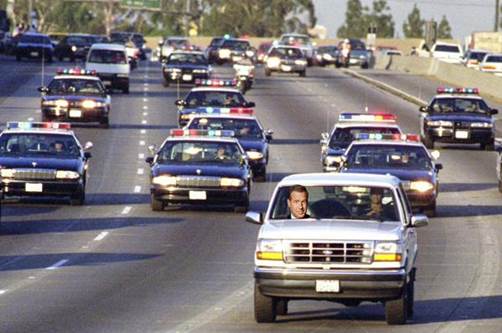
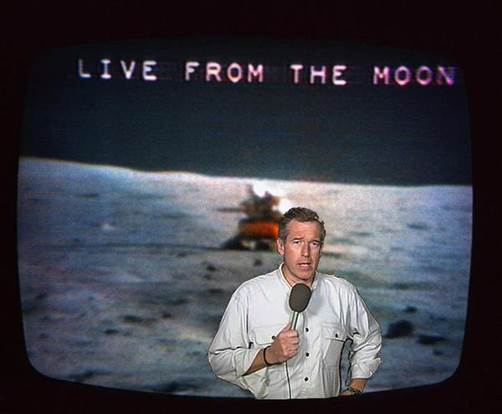
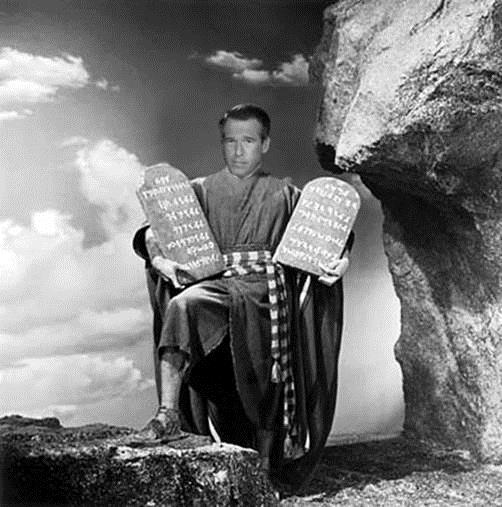
  I have been meaning to get back on my writing saddle and it took only one smart man to do something stupid to get me back in the game, two words, “Brian Williams”. I have to admit he reminds me of a quote,(Author unknown), “We are not logical animals, but emotional creatures, bristling with prejudices and motivated by pride and vanity.”. I have to admit I have never really understood the ego of people whom need to be in the limelight.  The American culture loves its small and large screen personalities.  We love them so much we build them up and then take great pleasure in tearing them down, we live in such a dysfunctional society.

I have included several snapshots I found of the egomaniac Brian, now I don’t believe anything he says, his real name is probably something like, “Tyrone” or something and the network thought it was too “ethnic”…

anyway…..


BW-OJ

” I invented the phrase, If the glove don’t fit, you must acquit”!!!!!!!!!!!!!!!


BW-Treker

” I took RPG’s while “BOINKING” all over the galaxy”!!!!!!!!!!!!!!!!!!!!!!!!!


 BW-Moon

 I told Neil Armstrong, One small step for man,  a giant leap for mankind!!!!!!!!!!!!!!!!!!!!


 I could go on forever, the point is that I am sure this occurs  everywhere on the planet… I have a very paranoid and extremely militant friend.  He always reminds me of how we doctors are an open book, type our names into google and you can find everything about our professional lives and our training and a great deal regarding our personal lives.  He would always tell me everyone else in society, check out their resume, they always embellish the truth. Now the news  is saying he, “disremembered” What the Fuck does that mean???  I see and view this as a clinical term called confabulation; In psychology, confabulation (verb: confabulate) is a memory disturbance, defined as the production of fabricated, distorted or misinterpreted memories about oneself or the world, without the conscious intention to deceive. I believe in his mind, he really was shot at….? I know this sounds strange, but he believes he was there in the war being shot at, the mind is a very powerful weapon, can be used for good or evil, and of course stupidity you decide..


Standard

LESSONS LEARNED LEARNING MEDICINE-1.5

1) Our personalities are a sum total of our life experiences and the people with whom we surround ourselves.

2) Most of us are more afraid to live than to die.

3) Everyone should experience a death in a public place ( I know this is dark) to witness life leaving this earth is transformational, and forces one to assess the importance of life.

4) Just because I don’t understand you, that does not make you an artist.

5) Stress is not the same to everyone; some individuals apparently have a large bandwidth to tolerate and manage stress

6) We exist throughout our lives as two individuals: the person we are, and the person we are capable of becoming. We should make it our mission to meet the people we encounter on our journey.

7) Sometimes you have to make the wrong choices in life to get you to the right places.

8) Mark Twain once said that two of the most important days in your life are the day that you were born and the day you find out why.

9) If you predict bad things consistently, eventually you will be right.

10) There is no substitute for the truth, no matter how ugly it may be.

Standard

LESSONS LEARNED LEARNING MEDICINE-151

1-There is a difference between a performance of strength and exuding strength under pressure.

2-Most stay silent because of fear.

3- Surrendering to injustice is cowardly.

4- The cost of inaction in life is incredibly high.

5-Fear is not an acceptable master.

6-Always choose courage over comfort.

7-Society fears a man who has lost everything but his courage.

8-In most organizations, it is so much easier to endorse disorder than admit corruption.

9- The most significant strength is in being kind to people who have tried to destroy you.

10-Your true character is how you treat others who cannot do anything for you.

Standard